

Evaluated against the Commission's non-compliance decision on lodging (recitals 369 to 434).
Summary
This design removes the lodging unit from the results page and replaces it with an accordion of booking providers, each getting a box of the same shape. Google appears as one entry in that list.
On the prominence test the design appears to be in compliance. The remaining question is whether the Hotel-Websites unit at the top, is considered a distinct service given that it does comparison work across properties.
Assumptions this assessment rests on
- Where one provider's card carries less detail than another's, the gap comes from what that provider supplies.
- Google's position in the provider list is random, or at least treated equivalent to other providers.
- A hotel name inside a third-party card leads to that third party's site, mirroring what a hotel name inside Google's card does.
The screenshots indicate all of these are correct.
1. What the page now looks like
A lodging query returns two things. A collapsed Hotel-Websites bar at the top, then a heading for the destination and a list of booking providers, each collapsed behind a chevron, with a control to show more providers.
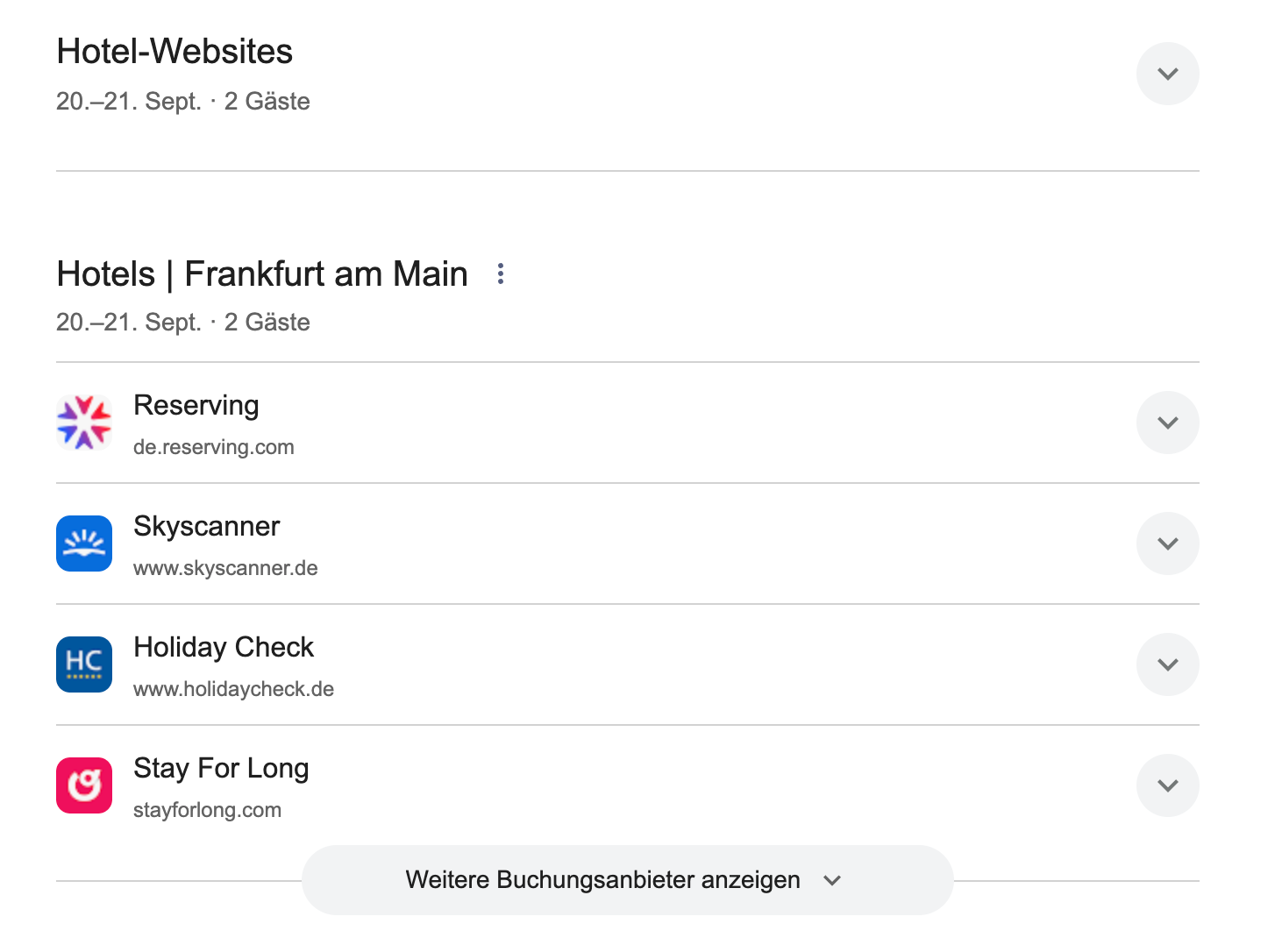
Frankfurt: the collapsed results page. Reserving, Skyscanner, Holiday Check and Stay For Long, none expanded on load.
The London example shows the same structure with Google present as one of the providers, third in the list, under its own domain, with the same chevron and the same collapsed state as the others.
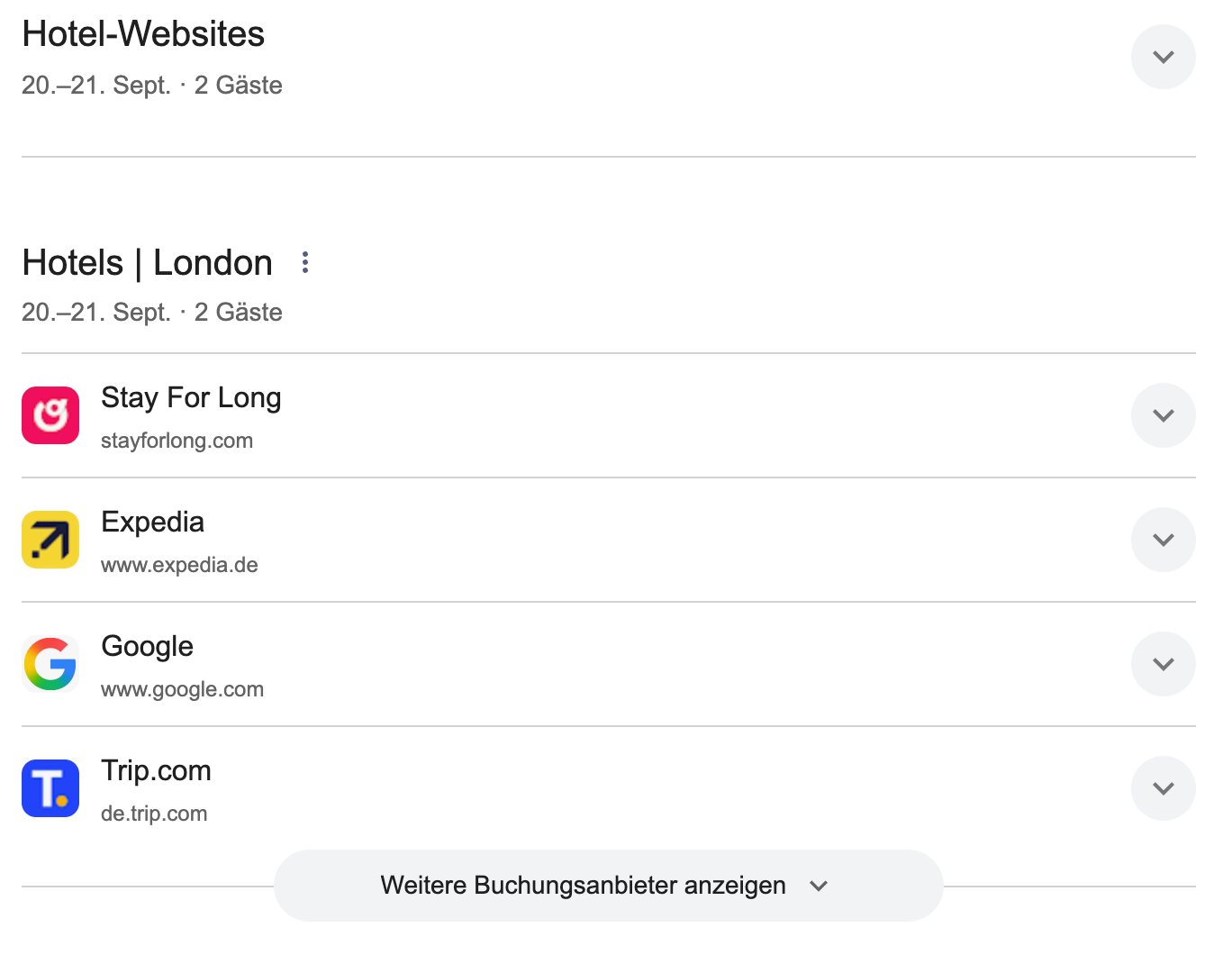
London: Stay For Long, Expedia, Google and Trip.com, in that order.
The dates and guest count appear once under the Hotel-Websites bar and again under the destination heading, so they apply to the whole list rather than to one provider's inventory.
2. Is a distinct or additional service still on the page?
The Commission found the old lodging unit distinct on two independent grounds at recitals 378 to 386: it let users filter, compare and interact with hotel offers on the results page with a view to booking, and it drew only from hotels and intermediaries that had opted in with a feed or a Business Profile.
Google's own hotel service is now shown as equivalent to every other provider shown. It appears that it competes for the click on the same terms as everyone else. This is a major concession.
The Hotel-Websites unit a possible exception
Expanding the top bar produces a Google-built box with a map, "from" price pins across the destination, and a carousel of properties carrying photos, amenities, prices and links.
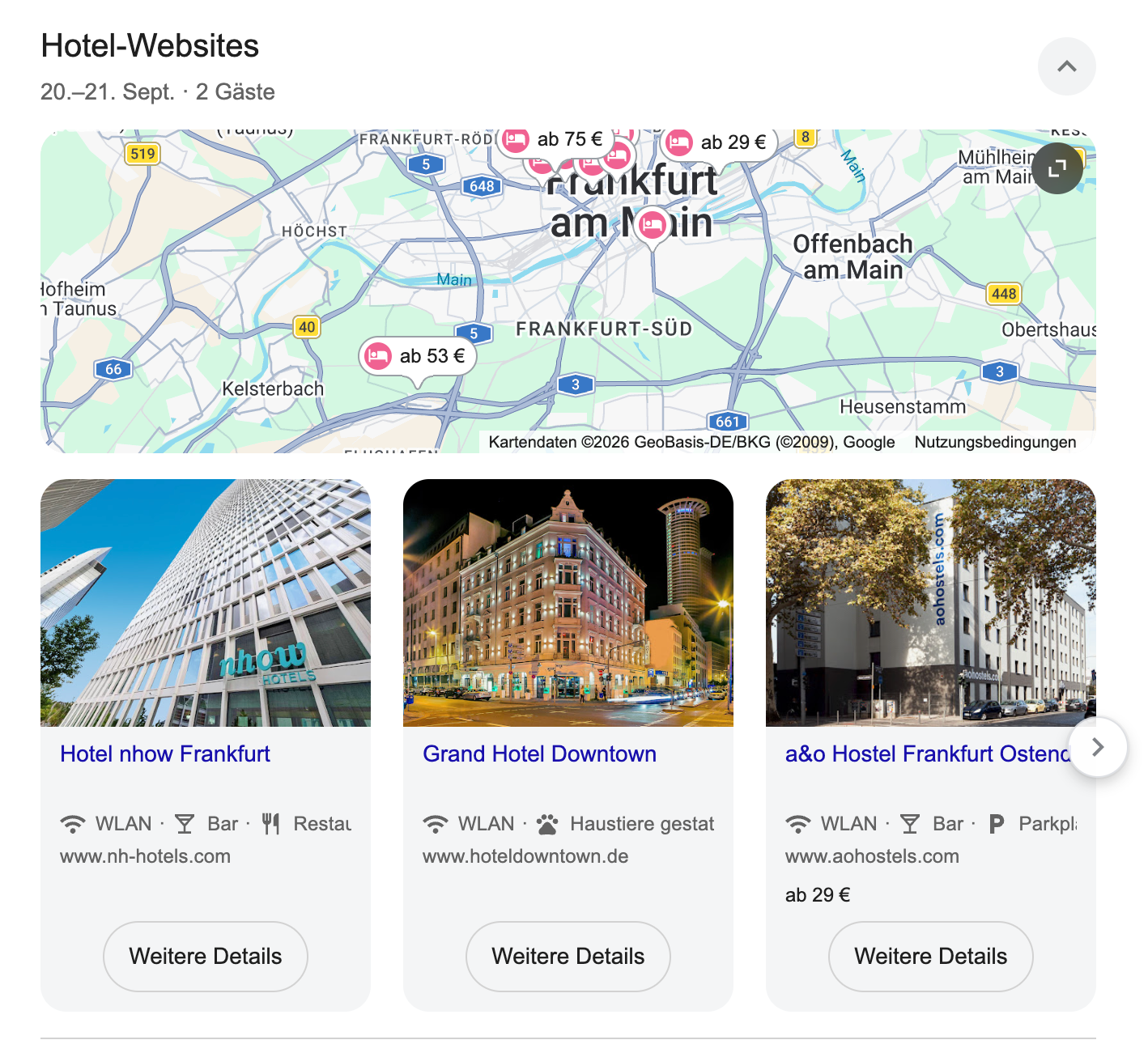
The Hotel-Websites unit expanded. Map, price pins, and a property carousel with photos, amenities and prices.
This could be considered a comparison unit between properties. However, it shows non-specific prices and displays hotels regardless of whether they have a commercial relationship with Google, or a verified Business Profile.
From the Complaint document, we can infer that Google's answer is that this box is not an intermediation service, because every link goes to a hotel's own site rather than a Google page.
It isn't completely clear how this will be viewed. Recitals 431 and 433 indicated that keeping users comparing on Google's own results page is part of what is at issue.
3. Do similar third-party services exist?
The screenshots confirm third parties appear in an equivalent manner, supporting recitals 400 to 408. Expedia, Trip.com, Skyscanner and Holiday Check all appear, alongside smaller providers such as Reserving and Stay For Long.
4. Does Google's own service get more favourable treatment?
The Commission's objection at recitals 413 to 427 was structural: no individual intermediary got a dedicated box comparable to Google's lodging unit, and the Places sites tab spread prominence across several intermediaries at once. Each provider now gets its own box, in the same format, with its own map and its own inventory.
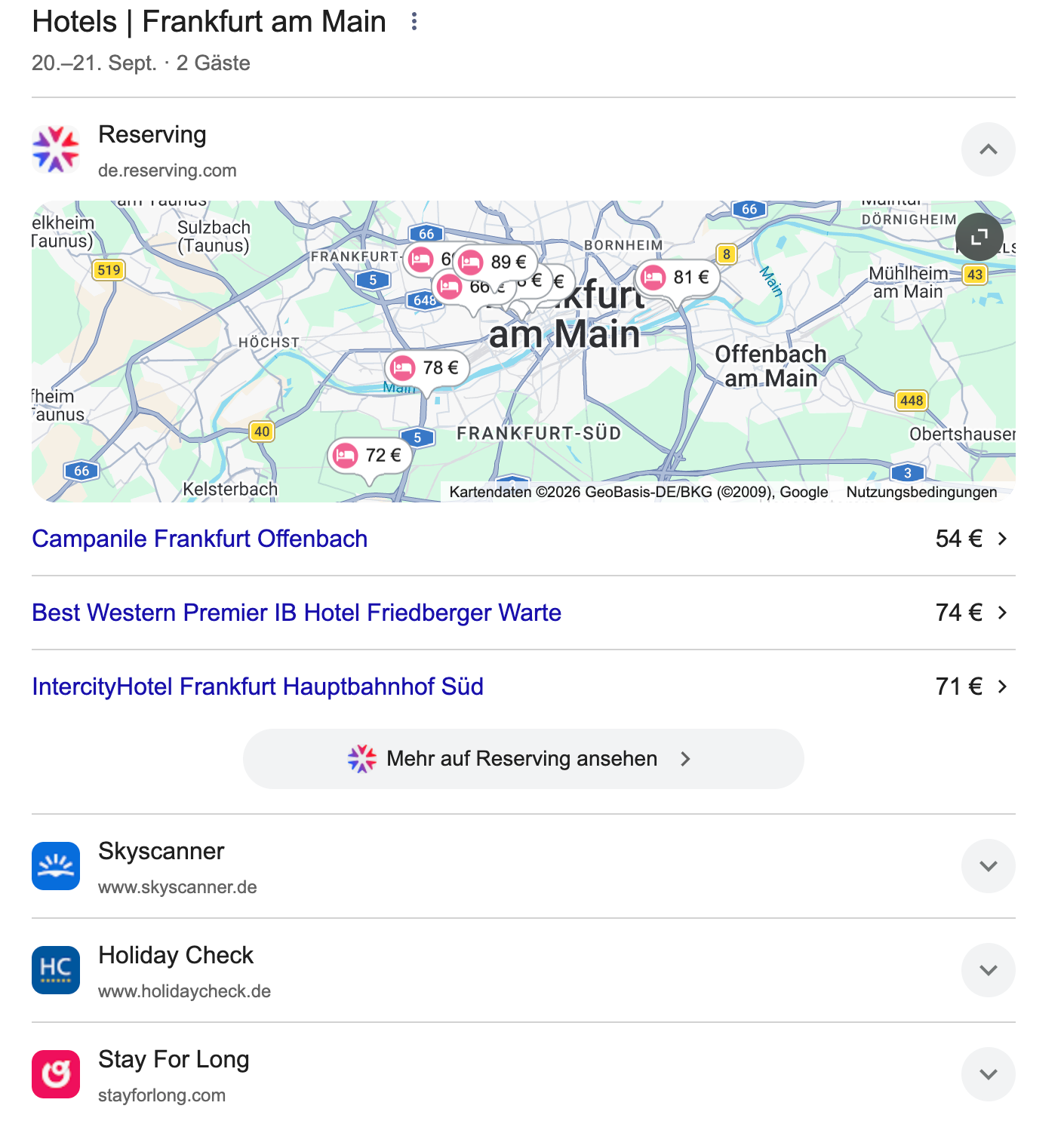
Reserving expanded: its own map with its own price pins, three properties with prices, and a link out to Reserving.
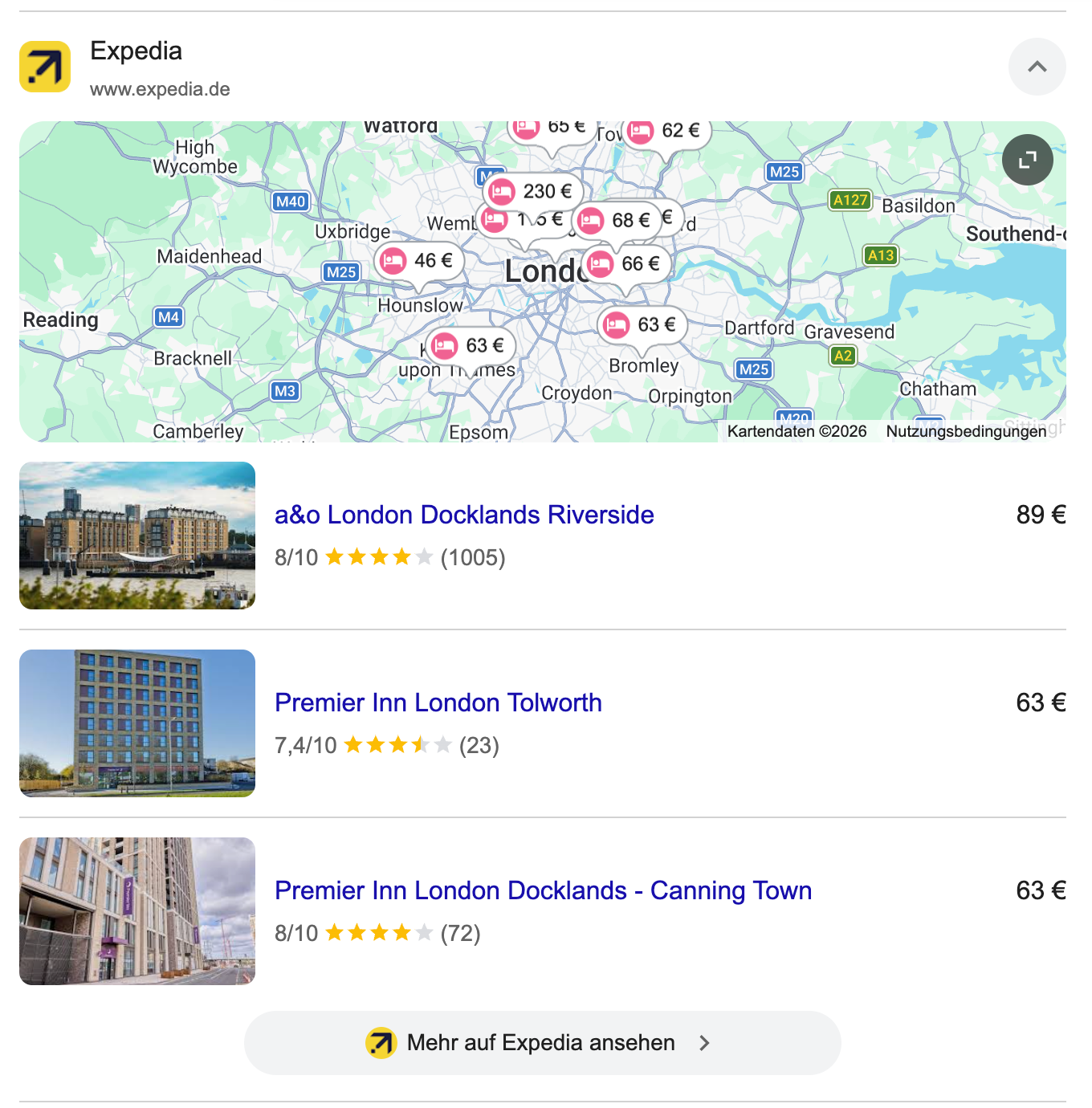
Expedia expanded: the same box, filled with photos, ratings out of ten and review counts.
The minor differences between the two is based on what each provider supplies. Reserving gives only names and prices, Expedia gives photos, ratings and review counts, and Google renders whatever arrives.
Google's own card sits in the same list, in the same shape, with a map, three properties, and a link reading "Mehr auf Google ansehen" that does for Google what "Mehr auf Reserving ansehen" does for Reserving.
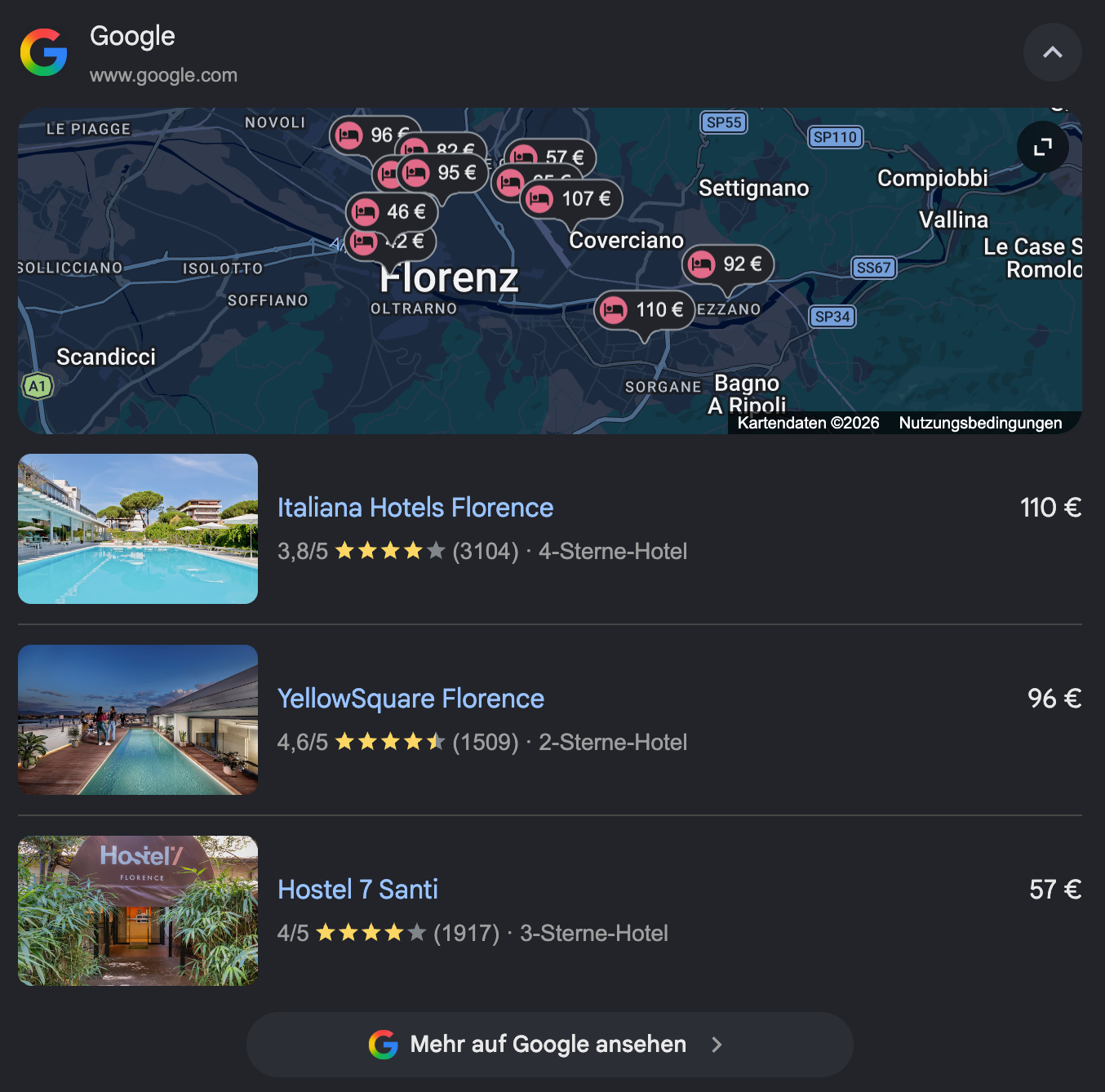
Google as one provider among several, in the same box as the others.
Nothing is expanded on load in either the Frankfurt or the London example, so no provider gets a "head start" on the page. Google appears third in the London list, between Expedia and Trip.com.
Random placement is the strongest fact here
Article 6(5) asks whether both services are given the same possibility to be prominently shown under the same conditions. It is a test of equal opportunity, not of equal outcome. It isn't clear yet if Google is randomizing the list, but random ordering is easier to defend than any ranking rule Google could write.
Map functionality is handed to every provider
The map expando opens inline and keeps the user on the results page. Each provider gets a full-width map with its own price pins, mini-cards on hover, and a card that stays visible when a pin is clicked.
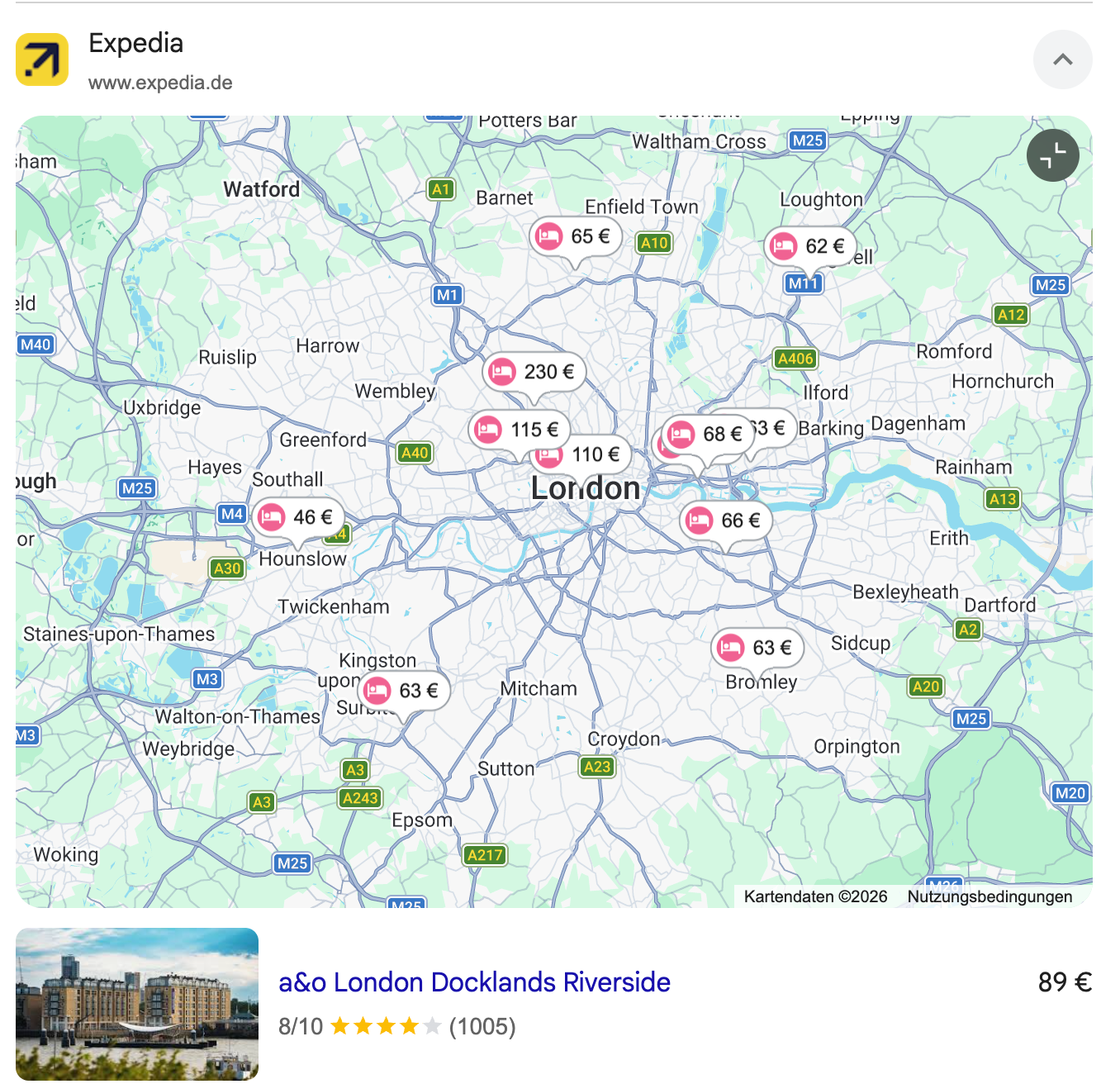
Expedia's map expanded inline, with Expedia's pins and prices.
This is the functionality the Commission described at recitals 378 to 386 as making Google's unit a comparison tool rather than a results list. It now runs on Expedia's inventory, using Expedia's prices, linking to Expedia. It puts comparison back onto the results page, which is a point against the design, but it does so for every provider on identical terms rather than for Google alone.
The deep links are symmetric
Clicking a hotel name inside Expedia's card lands on Expedia's own search page with that property at the top.
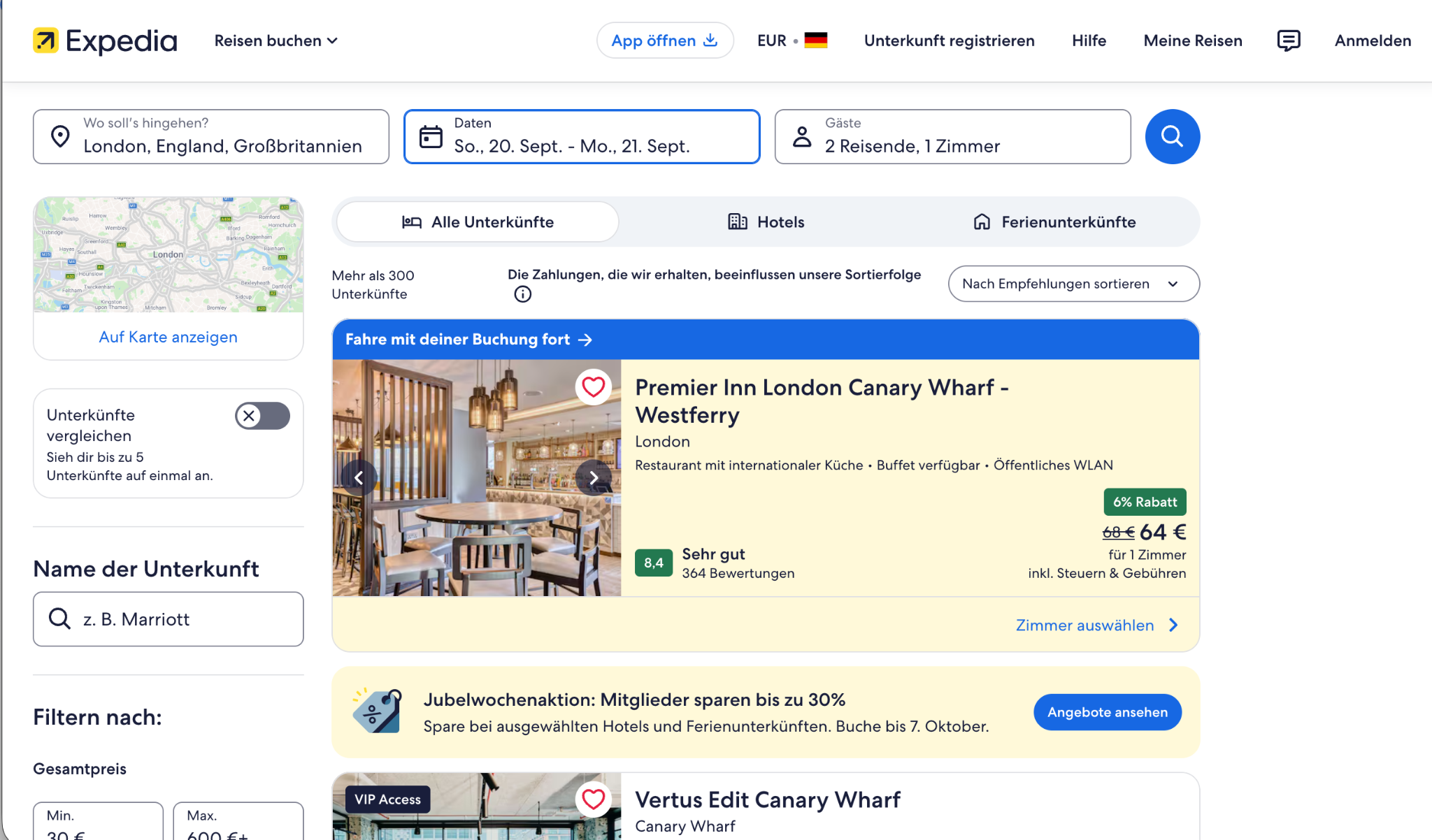
Expedia's Hotel-Search page, reached from a hotel name in Expedia's card, with the selected property featured.
Clicking a hotel name inside Google's card lands on Google's immersive experience with that property featured. Same behaviour, each on its own surface, which is the third assumption above.
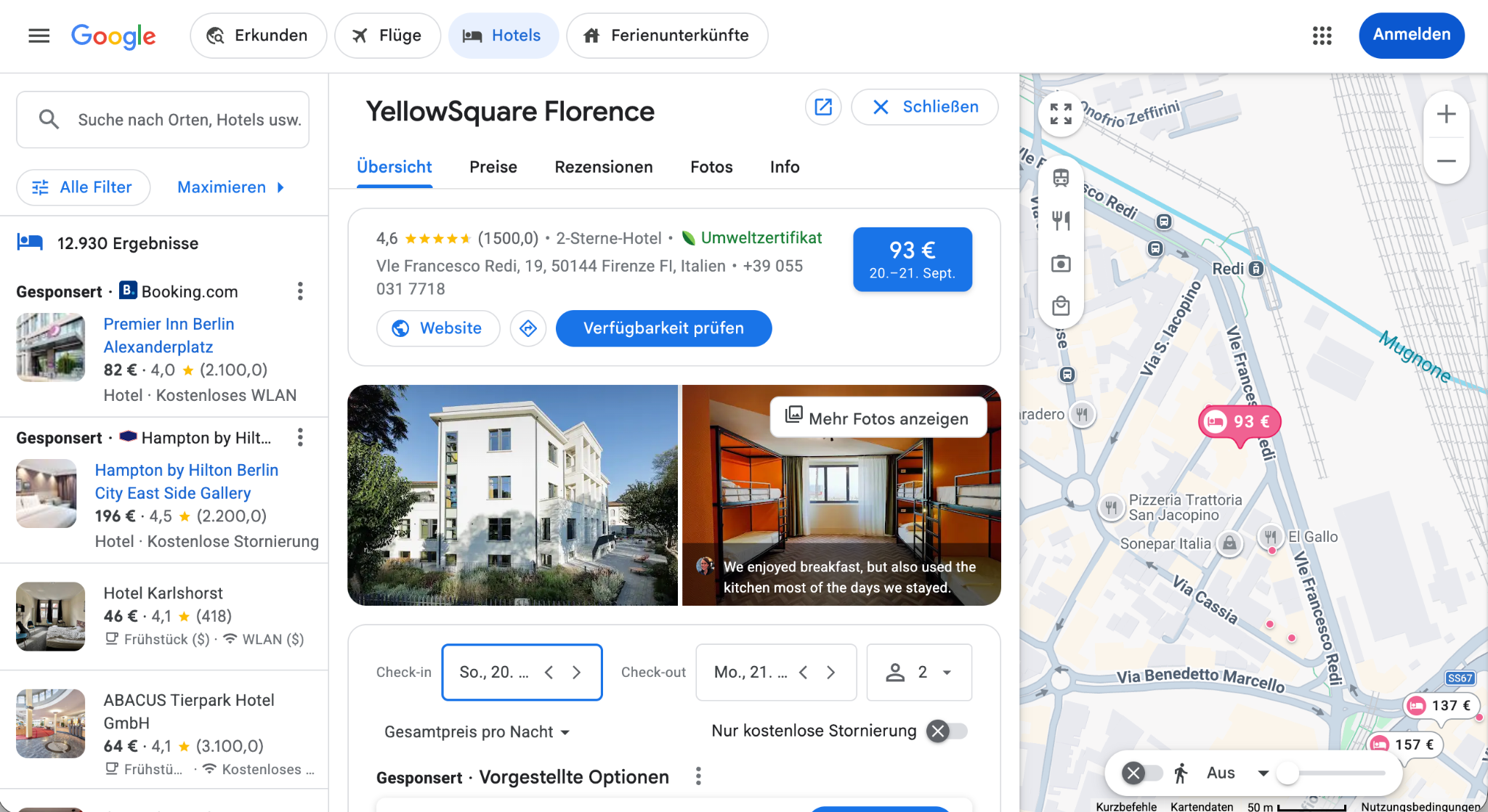
Google's immersive experience, reached the same way from Google's card.
The Commission's complaint at recital 433 was that a third party placing an offer inside a panel Alphabet controls is not a substitute for having prominence of its own. That's solved; nobody places offers inside anybody else's box.
5. What remains exposed
- The Hotel-Websites unit holds a fixed slot above the provider list, and it is the only Google-built comparison surface on the page. Section 2 covers this. It is the main risk in the design.
- Eligibility. Recital 370 records that a site must qualify as a vertical search service and be added to Alphabet's internal list before it can appear in the Places sites unit. If similar gating decides who gets a card here, equal treatment inside the list sits on top of a decision Google controls about who enters it.
- Four providers show before the control to reveal more. Random ordering answers who goes first among the four. It does not answer how those four are drawn from the full set.
- The two destinations differ in kind. Expedia's "view more" link lands on a destination page with an empty date form. Google's lands on a live results list with the dates carried through, filters and a map. That is mostly Expedia's choice of landing URL rather than Google's ranking, but the comparison will be made.
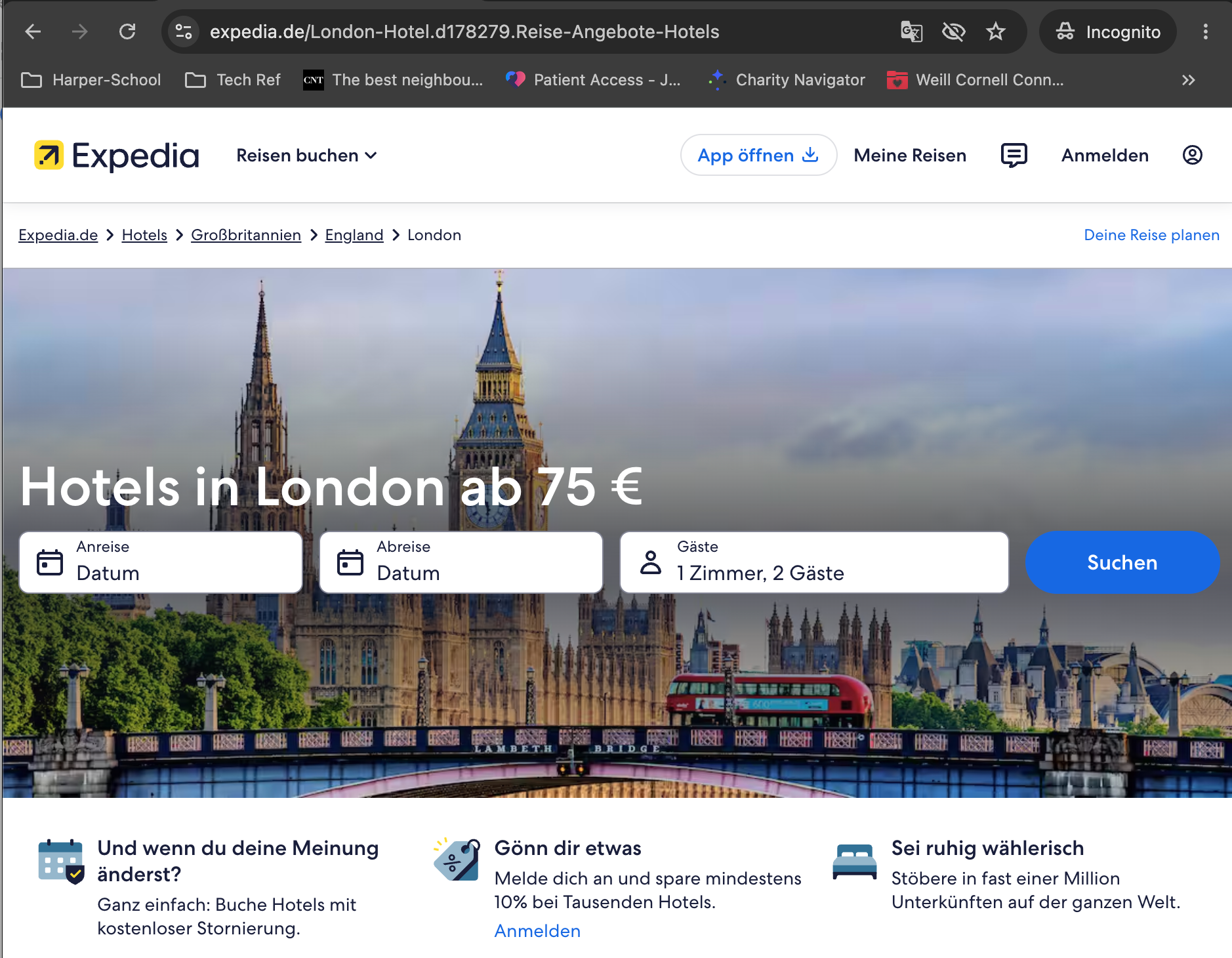
Expedia's destination landing page, reached from "Mehr auf Expedia ansehen", with dates not carried through.
6. Conclusion
Google's hotel service now sits in a list of providers, in a box of the same shape, in a random position, with symmetric expand behaviour, symmetric map functionality and symmetric deep links, and the comparison work happens on whichever provider's surface the user picks. Nothing here asks a third party to appear inside a Google panel.
The open question is the Hotel-Websites unit. It performs comparison across properties on the results page and holds a fixed position above every provider.